




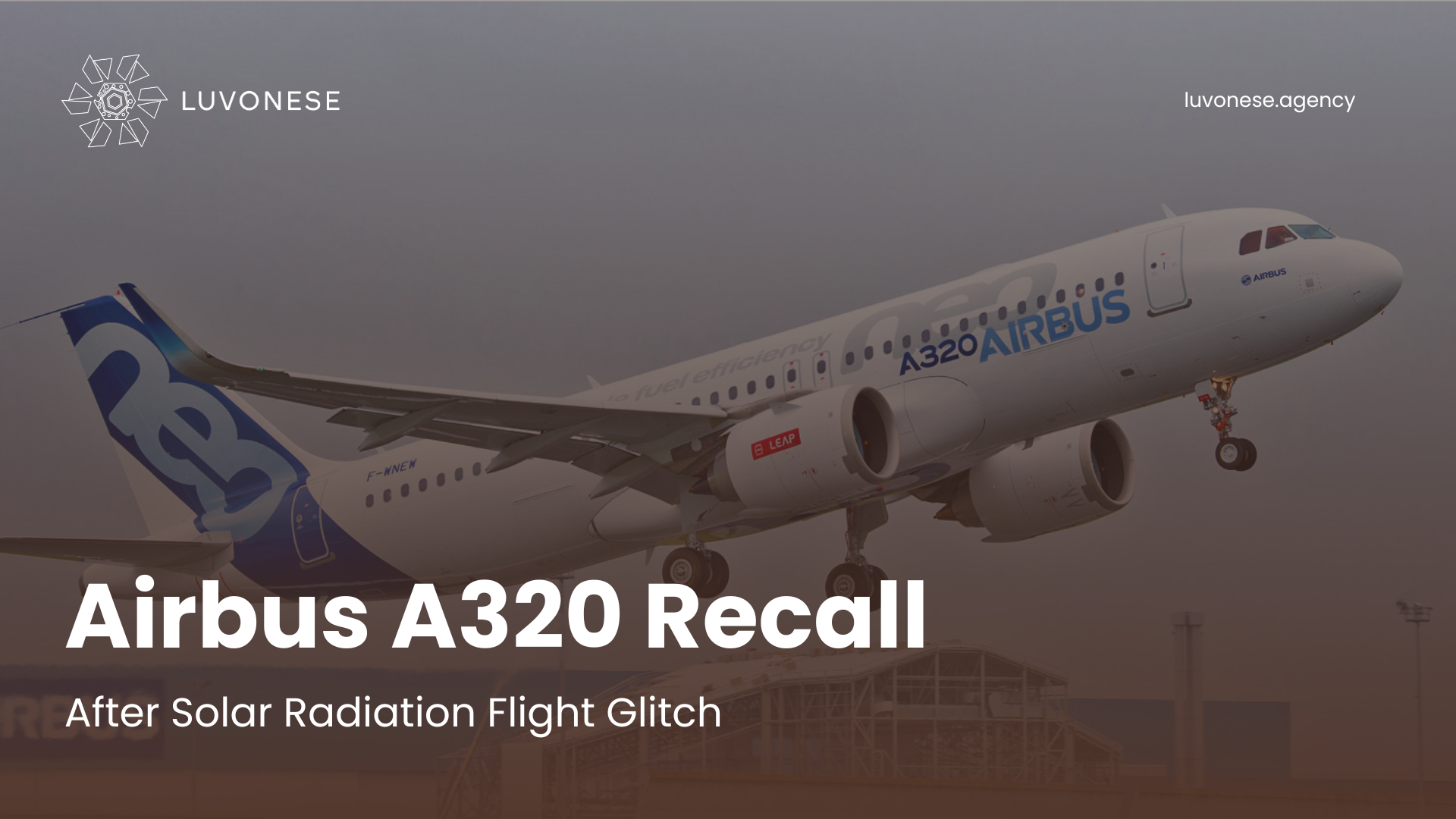
In late November 2025, Airbus announced an urgent recall affecting approximately 6,000 A320-family aircraft worldwide. The Airbus A320 recall decision came after investigators discovered that intense solar radiation — during a recent solar event — had the potential to corrupt critical flight-control data in onboard computers. Sky News
The move shocked the aviation industry and travelers alike. Affected jets were grounded or scheduled for urgent software or hardware updates before being cleared to fly again. The manufacturer emphasized that passenger safety remains the top priority. Airbus
What Went Wrong: Solar Radiation and Flight Computers
According to the official statement from Airbus, the issue lies with the flight-control computer (ELAC / control software) used in A320 jets. Under “intense solar radiation,” data corruption could occur — potentially causing erratic flight-control behaviour. Airbus
This problem came to light after a mid-air incident: an A320 operated by JetBlue reportedly suffered a sudden altitude drop in October 2025 — a malfunction linked to corrupted data. That triggered a full investigation. Wikipedia
Scope: Thousands of Aircraft — Including Planes in Indonesia
The recall impacts a large portion of the A320 fleet globally — roughly 6,000 jets. Airbus
In Indonesia alone, reports indicate about 38 A320 aircraft across several airlines are affected. detikfinance
This means flights worldwide — from short domestic hops to major international routes — could be subject to delays or cancellations while updates are applied.
What’s Being Done: Urgent Updates & Safety Fixes
Under the guidance of the European Union Aviation Safety Agency (EASA), Airbus issued an Emergency Airworthiness Directive (EAD) demanding either a software reversion or hardware protection for all potentially impacted jets before further flights. Airbus
Most airlines responded immediately. According to recent reports, the vast majority of affected A320s have already received the required fix. Fewer than 100 jets globally remain grounded while awaiting completion. nationthailand
The software fix reportedly takes 2–3 hours per aircraft, making it relatively quick, though logistical challenges and mass scheduling delays remain — especially amid a busy travel season. Sky News
What It Means for Safety: Lessons in Cosmic & Aviation Risks
This incident highlights a seldom-considered risk in modern aviation: the impact of solar radiation / space weather on high-tech flight systems. As aircraft rely more heavily on digital avionics, such vulnerabilities — previously theoretical — are now real.
Experts suggest airlines may need to review shielding and redundant systems in avionics — especially for control systems exposed at high altitude. They also warn that as solar activity increases (solar maximum cycles), more carriers worldwide should prepare for similar challenges.
Passenger Impact: Disruptions, Delays, & Anxiety
With thousands of aircraft temporarily grounded or undergoing maintenance, many passengers experienced delays or cancellations — especially on short notice. For frequent flyers and global travelers, the recall felt like a stark reminder of how external factors beyond airlines’ control can still impact flights.
Airlines issued apologies and reassurances, stating the recall was “precautionary and necessary to guarantee flight safety.” Still, social media and aviation forums lit up with concern and frustration.
Regulatory & Industry Response: Rapid Coordination
Regulators like EASA and its global counterparts — including civil aviation authorities in Asia — moved quickly. The joint response underlines the interconnected nature of modern aviation: when a flaw is found in one region, airlines worldwide must act.
Airbus pledged ongoing transparency and cooperation, working around the clock to deploy fixes. As of early December, fewer than 100 planes remain unupdated — a remarkable logistical feat, though not without disruption. nationthailand
What’s Next: What Airlines and Passengers Should Know
-
Airlines are conducting final checks and rigorous tests before returning A320s to service.
-
New flight-control software versions will be standard for A320 jets going forward; hardware shields may be considered for future builds.
-
Passengers — especially frequent flyers — should monitor notifications from airlines for potential delays.
-
There may be broader industry reviews, with regulators pushing for stricter standards against cosmic-radiation risks in avionics.
Final Thoughts
The Airbus A320 recall is more than a technical glitch — it’s a wake-up call for the aviation world. In an age where air travel and space weather intersect, even the most common commercial jets can become vulnerable.
For now, safety prevailed: swift detection, global coordination, and rapid fixes. But the event reminds us that as technology evolves, so do the risks — and vigilance remains essential.