






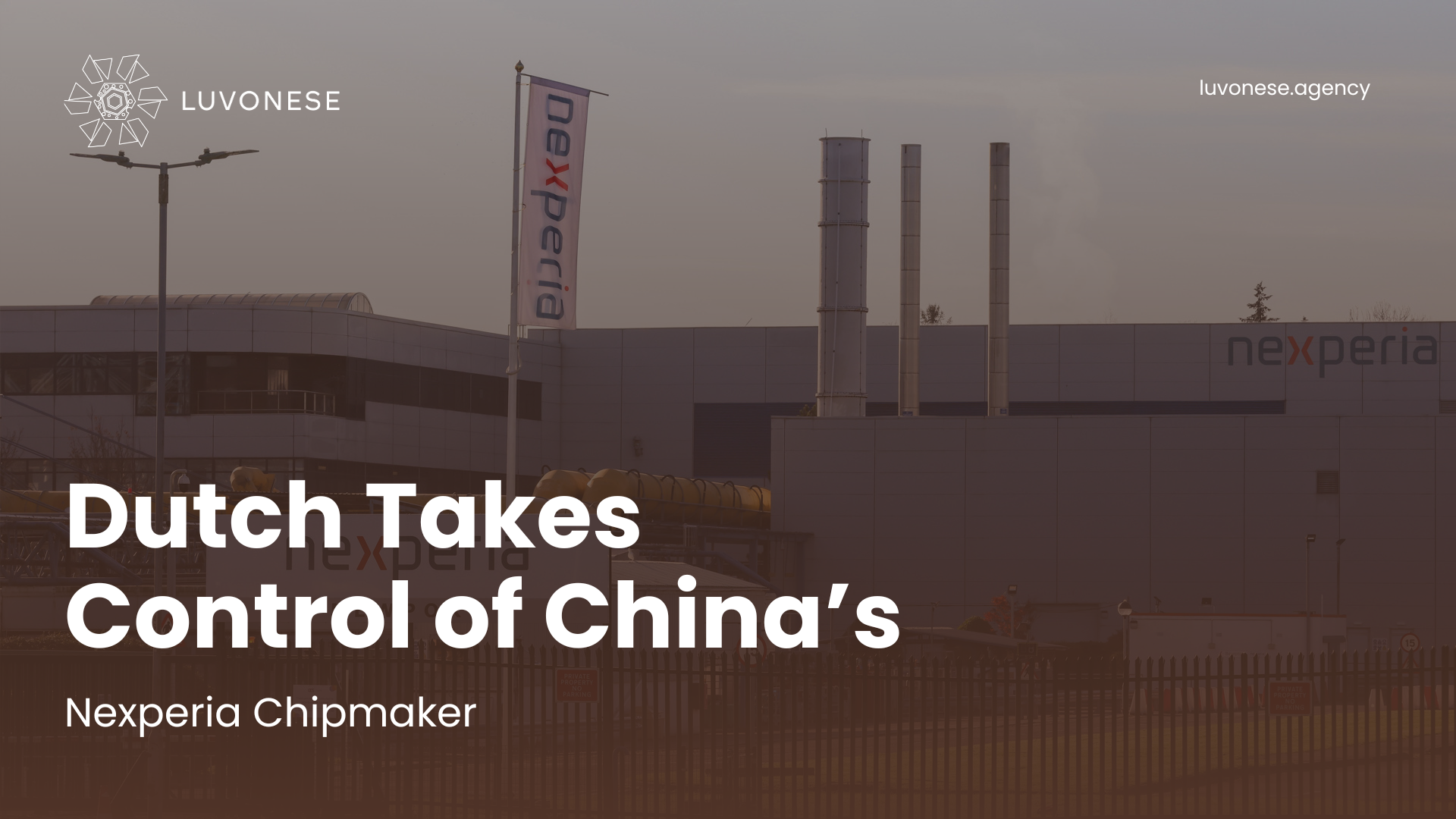
The Dutch government has taken control of the semiconductor manufacturer Nexperia, escalating tensions with Beijing as global competition intensifies over advanced technology and intellectual property in the chip sector.
Authorities announced the move on Sunday, citing national security concerns and the risk of sensitive technology being transferred to Nexperia’s Chinese parent company, Wingtech. The company, headquartered in Nijmegen, produces chips used in vehicles and consumer electronics.
The Netherlands invoked emergency powers under the “Availability of Goods Act” — a law rarely used — to temporarily assume control of Nexperia’s operations. Although ownership remains with Wingtech, the government now has the authority to reverse or block management decisions deemed harmful to national or economic interests. Nexperia’s production activities will continue as normal.
Wingtech Criticizes Move as Politically Motivated
Wingtech responded by calling the decision an “excessive intervention driven by geopolitical bias.” The company claimed the Dutch action was influenced by Western political pressure rather than business concerns. Following the announcement, Wingtech’s shares fell by nearly 10% on the Shanghai Stock Exchange.
Meanwhile, Dutch officials emphasized that the decision was made independently and not in coordination with the United States, despite both countries cooperating closely on semiconductor export controls. They described the timing as coincidental.
Background of Tensions and Legal Action
Wingtech, which acquired Nexperia in 2018 for $3.63 billion, has faced scrutiny from multiple Western governments over its semiconductor operations. U.S. authorities previously added Wingtech to their “entity list” for allegedly assisting Beijing’s efforts to acquire sensitive chip-making technology.
Legal documents from an Amsterdam commercial court revealed that on October 1, Wingtech’s CEO Zhang Xuezheng was suspended from his executive role at Nexperia. The court found “well-founded reasons to doubt” that the company was following proper management practices. Dutch businessman Guido Dierick was appointed to temporarily replace Zhang, with authority over key decisions and share management.
Safeguarding European Technological Interests
The Dutch government stated that the intervention was necessary to protect Nexperia’s “critical technological expertise” — a capability considered essential for the nation’s and Europe’s economic security. Officials warned that losing such expertise could harm both domestic and EU competitiveness in the semiconductor field.
Nexperia is one of the world’s largest producers of essential components such as diodes and transistors and also develops advanced “wide bandgap” semiconductors. These technologies are increasingly vital for electric vehicles, renewable energy systems, and artificial intelligence infrastructure.
Temporary Restrictions on Wingtech’s Control
Wingtech confirmed in a filing to the Shanghai Stock Exchange that its management authority over Nexperia would be temporarily limited following the Dutch order and related court rulings. The company said these restrictions could affect its operational efficiency and strategic planning.
Beyond the Netherlands, Wingtech has faced similar challenges elsewhere. In 2022, the British government ordered the company to divest its stake in a semiconductor facility in Newport, citing national security risks. The Dutch government also reviewed Nexperia’s acquisition of the startup Nowi in 2023 to ensure compliance with EU investment screening rules.
Wingtech said it is consulting with legal advisers and seeking government support to defend what it described as its “legitimate rights and interests.”
Implications for Europe’s Tech Sovereignty
The intervention underscores Europe’s determination to secure control over strategic technologies amid intensifying global chip competition. Semiconductor components — often called the “brains” of modern electronics — have become a focal point in geopolitical and economic rivalries between nations.
By asserting control over Nexperia, the Netherlands has joined other Western governments that are reinforcing industrial policies to protect domestic innovation. This aligns with the broader European Union strategy under the EU Chips Act, which aims to boost local semiconductor manufacturing and reduce dependence on foreign supply chains.
Analysts suggest that this move could reshape Europe’s role in the semiconductor landscape, setting a precedent for how governments may intervene in tech industries to safeguard critical national interests.
Conclusion
The Dutch government’s decision to seize control of Nexperia marks a turning point in the ongoing global competition for semiconductor dominance. While the move may strain relations with China, it also reflects a growing emphasis on technological sovereignty and security within Europe.
As chip demand continues to surge for electric vehicles, AI data centers, and green technology, protecting semiconductor production has become a matter of national strategy. Nexperia’s case highlights how the lines between commerce, politics, and security are blurring in today’s high-tech economy.