






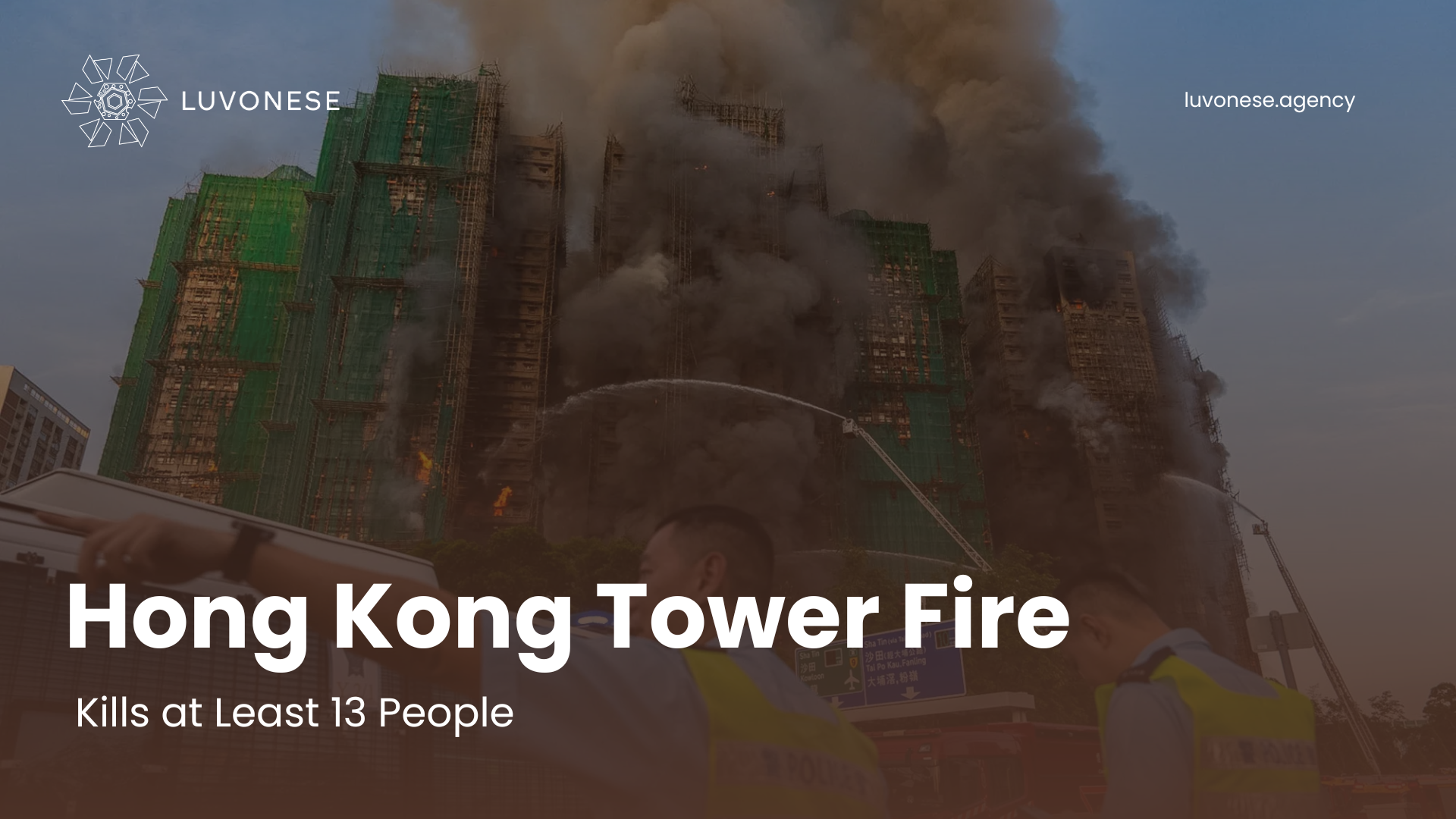
A devastating fire tore through a residential tower in Hong Kong, killing at least 13 people and injuring several more. The blaze erupted inside Wang Fuk Court in Tai Po District, sending thick smoke through multiple floors and forcing residents into chaotic overnight evacuations.
The tragedy marks one of the city’s deadliest high-rise fires in recent years, prompting urgent discussions about building safety and emergency preparedness in one of the world’s most densely populated urban regions.
Residents Describe Panic as Thick Smoke Filled Hallways
Survivors recount waking up to blaring alarms and thick smoke that quickly made corridors impassable. Parents carried children through the darkness, while others attempted to shield their faces with wet towels as they navigated stairwells filled with fumes.
Many residents became trapped inside their units due to blocked hallways, waiting desperately for firefighters to reach them. “It felt like the fire was everywhere at once,” one survivor said, describing near-zero visibility and rising heat.
Firefighters Battled Extreme Heat and Dangerous Conditions
Hong Kong Fire Services deployed multiple fire engines, ambulances, and high-reach ladders within minutes of the first emergency calls. Firefighters forced their way into the building through intense heat, searching room by room for survivors.
The design of the tower, combined with limited ventilation in certain sections, made it difficult to contain the fire. Despite these challenges, emergency crews worked throughout the night to save as many people as possible.
For reference on high-rise fire behavior and standards: nfpa.org
Cause of the Fire Still Under Investigation
Authorities have not yet confirmed the cause of the blaze. Early findings suggest the fire may have originated in a mid-level apartment, possibly caused by an electrical malfunction or overheating appliance.
Investigators are reviewing burnt materials, wiring, ventilation systems, and witness reports to determine whether aging infrastructure, equipment failure, or safety lapses contributed to the incident.
Widespread Damage Leaves Families Displaced
Dozens of units suffered serious damage from flames, smoke, and water. Many families have been forced to evacuate with only the clothes they were wearing at the time. Emergency shelters have been opened to provide temporary housing, supplies, and medical support.
Residents spoke of heartbreak over the loss of loved ones, pets, and lifelong possessions — turning what was once a quiet residential community into a site of mourning and shock.
Rising Concerns Over Hong Kong’s High-Rise Safety
This tragic incident has renewed public debate over the safety of high-rise residential buildings in Hong Kong. With thousands of towers built over past decades, concerns are growing over old wiring systems, restricted ventilation, and overcrowded living spaces.
Experts emphasize that building owners must conduct routine inspections, maintain fire safety equipment, and ensure that evacuation routes remain unobstructed at all times.
Community and Government Mobilize to Help Victims
Local NGOs, volunteers, and neighborhood associations quickly mobilized to support survivors by providing meals, clothing, and emotional care. Mental health counselors are offering trauma support for affected families.
The Hong Kong government has pledged emergency financial assistance and promised a comprehensive investigation into whether additional safety measures should have prevented the tragedy.
What Happens Next
Structural engineers will conduct a full assessment of the damaged tower before residents are allowed to return to collect belongings or rebuild their homes. Authorities will release updated findings on the cause of the fire once the investigation concludes.
For now, the community continues to mourn the 13 victims while calling for better oversight of residential tower safety across the city.
Final Thoughts
The Hong Kong tower fire that killed at least 13 people serves as a painful reminder of the risks faced by residents living in high-rise buildings. Though firefighters responded bravely and communities united to support survivors, the incident highlights the urgent need for enhanced fire-prevention measures, building inspections, and public awareness.
As Hong Kong reflects on this tragedy, the hope is that meaningful reforms will emerge to protect lives and prevent similar disasters in the future.