






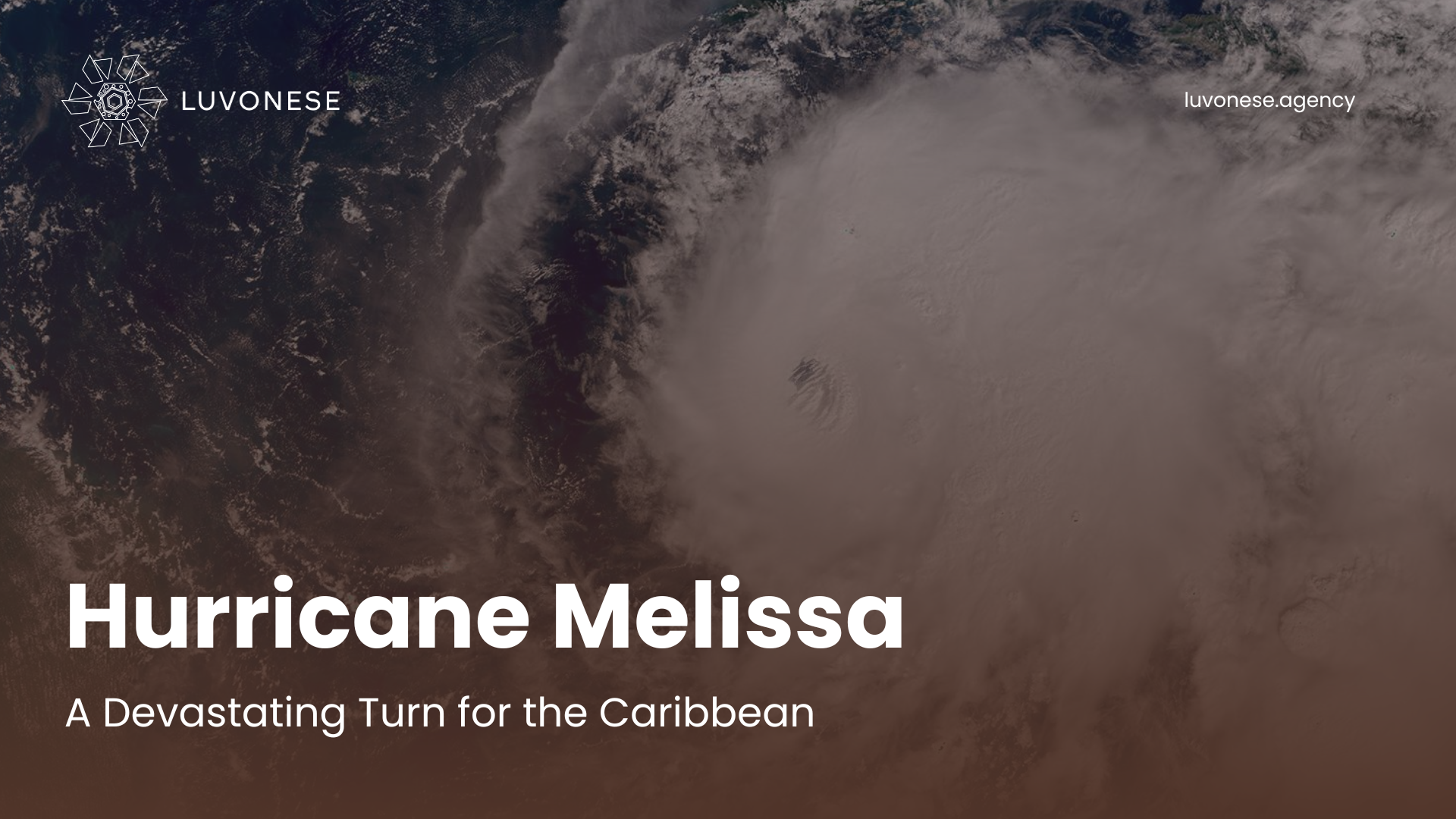
When Hurricane Melissa began forming in the Atlantic in late October 2025, few predicted it would become one of the most destructive storms in modern Caribbean history. Within days, the system intensified from a tropical disturbance into a Category 5 hurricane, leaving a path of destruction from Jamaica to Cuba. The event reignited debate over climate change, disaster preparedness, and how small island nations can protect themselves from the world’s growing weather extremes.
Storm Overview: The Rise of Melissa
In late October 2025, Hurricane Melissa barreled into the Caribbean with unprecedented force. The storm made landfall in Jamaica on 28 October with sustained winds of approximately 185 mph (295 km/h)—making it the strongest hurricane ever recorded to hit Jamaica and among the most powerful Atlantic landfalls on record. Reuters
Path and Meteorology: A Rapid Intensifier
Melissa formed from a tropical wave before rapidly intensifying across the central Atlantic. Scientists link this explosive growth to unusually warm sea-surface temperatures and favourable atmospheric conditions. The Guardian
Impact on Jamaica: “Storm of the Century”
Jamaica bore the storm’s full brunt—massive flooding, power outages, and collapsed infrastructure marked the island’s worst natural disaster in decades. The government declared a national emergency and deployed the military for rescue operations. Reuters
Next Stop: Cuba and Wider Caribbean Threat
After devastating Jamaica, Melissa moved toward eastern Cuba. Although it weakened to Category 3, torrential rains and landslides caused widespread damage. The Bahamas and surrounding islands also braced for residual impacts. The Guardian
Humanitarian and Economic Fallout
The storm’s humanitarian cost has been immense—thousands displaced, widespread crop losses, and entire coastal towns left without clean water or electricity. Jamaica’s tourism sector, a vital economic engine, also faces major setbacks. Le Monde
Climate Link: Why Melissa Was So Extreme
Meteorologists point to climate change as a major driver of Melissa’s strength. Record-high ocean temperatures in the Caribbean have increased the likelihood of rapid-intensification events—storms that leap from mild to catastrophic within 24 hours. NASA Earth Observatory
What Needs to Happen Now: Response & Resilience
Immediate recovery includes restoring power, rebuilding homes, and providing emergency aid. Long-term, experts urge Caribbean nations to strengthen disaster-resilient infrastructure and invest in early-warning technology. World Bank
Preparing for a Warming World: Lessons for the Future
Melissa’s devastation underscores an uncomfortable truth: stronger storms are becoming the new normal. Governments, businesses, and citizens must collaborate to adapt—from rethinking urban design to adopting green technologies that curb emissions.
Conclusion
Hurricane Melissa will be remembered not just for its record-breaking winds, but for what it revealed about our era of climate instability. As the Caribbean begins rebuilding, the lesson is clear—resilience is no longer optional. The world must prepare for stronger storms, faster responses, and a changing climate that shows no signs of slowing down.