





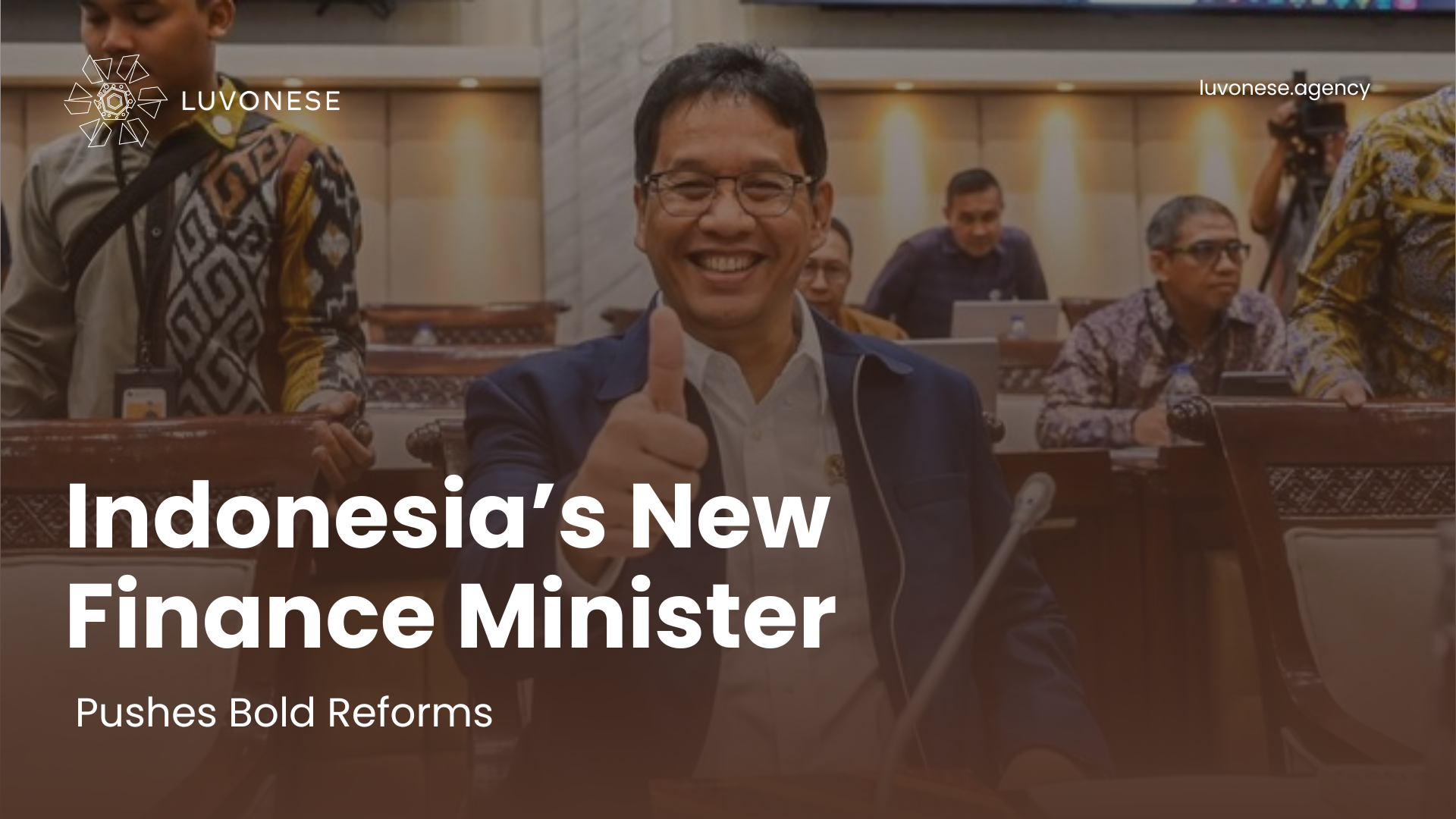
Indonesia has ushered in a new era in its fiscal and economic policy with the appointment of Purbaya Yudhi Sadewa as the country’s Finance Minister under President Prabowo Subianto. His first weeks in office have already featured a string of reform-oriented moves across banking, customs, regional transfers and imports oversight. This article provides an up-to-date overview of his agenda, strategy and the potential implications for Indonesia’s economy.
Background and appointment
Purbaya Yudhi Sadewa assumed the role of Finance Minister on 8 September 2025, succeeding Sri Mulyani Indrawati. Reuters With a background in economics (MSc & PhD from Purdue University) and engineering (undergraduate at Bandung Institute of Technology), he previously headed the Indonesia Deposit Insurance Corporation (LPS) from 2020 to 2025. Wikipedia His transition into the finance ministry signals the government’s intent to pivot toward a growth-led fiscal model.
Liquidity injection to state banks
One of his first major actions was transferring about Rp 200 trillion (around US$12 billion) from government reserves at the central bank into five state-owned banks (including Bank Mandiri, Bank Negara Indonesia (BNI), Bank Rakyat Indonesia (BRI), Bank Tabungan Negara (BTN), and Bank Syariah Indonesia (BSI)). The Business Times
Importantly, he stipulated that the funds must be used only for lending to the real sector, and not for bond purchases by the banks. Reuters This move shifts away from previous policy that emphasised fiscal buffers, toward more active credit mobilisation.
Coordinating with parliament
The minister has emphasised stronger coordination between the Ministry of Finance (Indonesia) and the House of Representatives of Indonesia (DPR) to accelerate budget realisation in Q4 and guard against external shocks. ANTARA News He described meetings as aimed at synchronising policy, improving transparency and responding to public needs—addressing concerns about friction between government and legislators.
Customs overhaul and AI supervision
Another pillar of his reform agenda is transforming the country’s export-import monitoring system. The minister announced plans to upgrade the National Single Window (LNSW) into an IT-driven intelligence centre, backed by the appointment of ten external experts to detect revenue leakages. VietnamPlus This emphasises a move toward digitalisation and tighter oversight of trade flows, which may help curb illicit imports and underpin fiscal revenue.
Crack-down on illegal second-hand imports
In line with the above, Purbaya stated the government would clamp down on illegal imports of second-hand clothing (“thrift imports”) and threatened arrests for those refusing compliance. Tempo The measure signals an attempt to protect domestic industry and stem non-tariff leakage, and is done alongside broader customs reform.
Growth targets and debt management
Purbaya is targeting Indonesia’s growth to hit around 6–7 % in 2026, up from about 5 % post-pandemic. Tempo He has flagged that government debt has reached Rp 9,138 trillion and plans are underway to reduce the deficit accordingly. Tempo While the liquidity injection is growth-oriented, he maintains that fiscal discipline remains a key objective.
Market reaction and investor sentiment
Reactions from markets have been mixed. Some global firms (such as Schroders) are bullish on Indonesian bonds under Purbaya’s policy shift. The Business Times On the flip side, when he was appointed, the stock index and rupiah weakened due to investor uncertainty about the new direction. Financial Times The balance between stimulus and discipline will be key to maintaining investor confidence.
Key implications for Indonesia’s economy
-
The liquidity push may ease credit dryness and help fund private investment, if banks comply and demand materialises.
-
Digital customs oversight could raise revenue, curb leakages and improve trade efficiency, supporting fiscal health.
-
The crackdown on illegal imports shows a lean toward more protectionist and oversight-driven trade policy.
-
The coordination with parliament and emphasis on transparent budget realisation may improve governance and speed of delivery.
-
Risks remain: low demand for credit could limit impact, more spending may challenge debt/fiscal rules, and market confidence may waver if reforms falter.
Looking ahead
Purbaya’s agenda is ambitious and front-loaded. Over the coming months we will watch:
-
how much of the Rp 200 trillion injection gets channelled into productive lending;
-
whether the LNSW overhaul yields measurable revenue gains;
-
how the crackdown on illegal imports plays out in practice;
-
how fiscal discipline holds up alongside growth ambitions;
-
and how markets respond as more data emerges.
Conclusion
In sum, Purbaya Yudhi Sadewa has entered office with a clear reform-minded stance: prioritising credit expansion, digital oversight, trade discipline and closer legislative coordination. While the approach marks a departure from the previous era’s emphasis on buffers, it also carries new risks. Indonesia’s success under this regime will depend on execution, monitoring and maintaining the fine balance between growth and stability.