




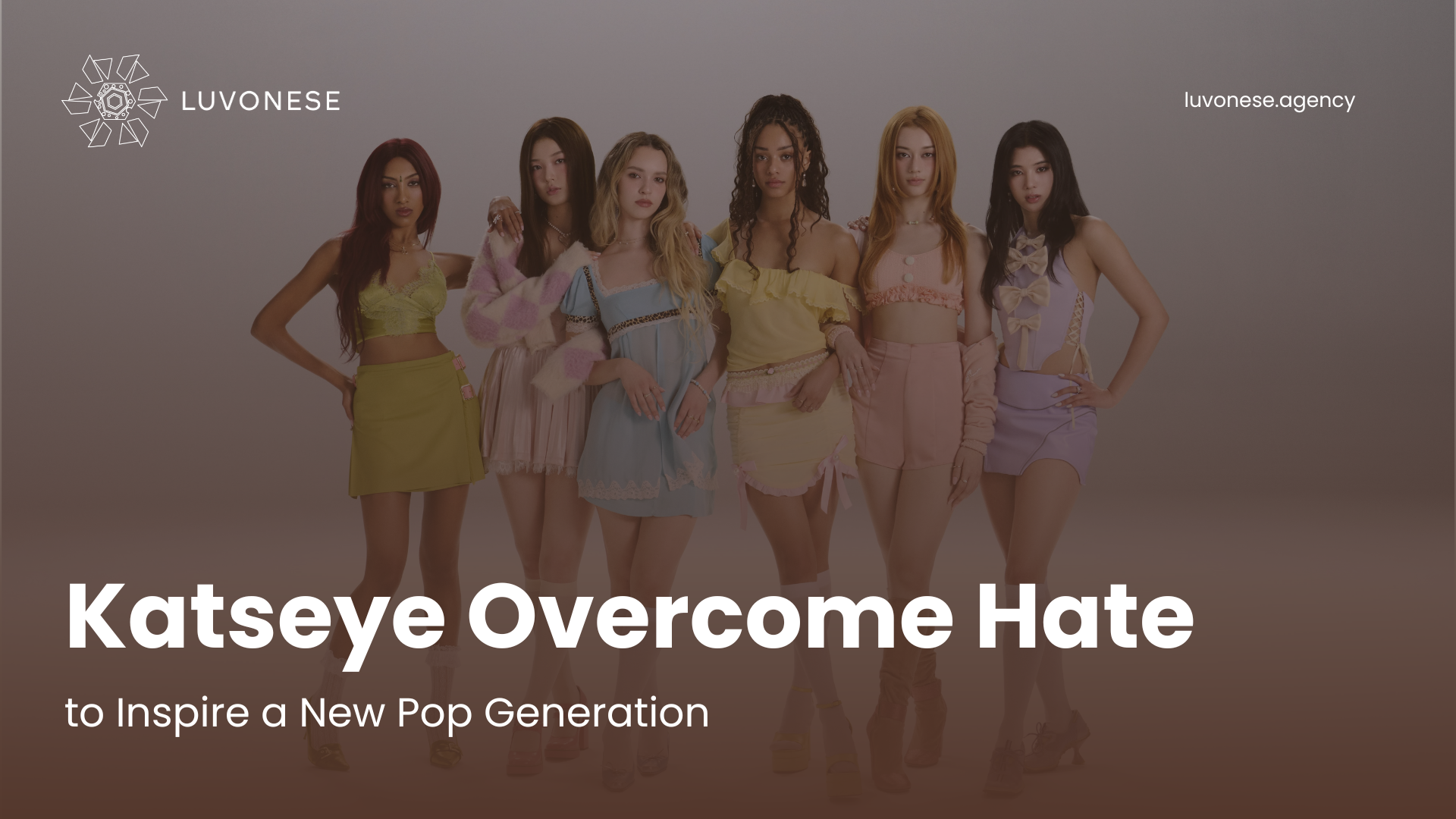
In a world where fame and fear often coexist, Katseye — a groundbreaking global girl group formed by HYBE and Geffen Records—are rewriting what it means to be pop icons.
Since their debut last year, the six-member group has soared to international acclaim, collecting major nominations and chart success. But behind the spotlight, they’ve faced something darker: waves of online death threats, racist comments, and harassment aimed even at their families.
Rather than letting it define them, Katseye have chosen resilience over retreat. As singer Lara Raj put it in an interview with BBC News:
“I try to tell myself it doesn’t matter, but if 1,000 people are sending you death threats, it’s jarring… even if it’s not going to happen, it’s heavy.”
BBC News
Global Fame and the Weight of Online Hate
Katseye’s rise was rapid. Formed through The Debut: Dream Academy, a joint reality project by HYBE (the label behind BTS and LE SSERAFIM) and Geffen Records, the group became a viral sensation.
But with fame came scrutiny. Members reported being targeted by online hate campaigns that questioned their looks, race, and legitimacy as artists.
Raj, a Tamil Indian-American, has faced racism and even false immigration reports. Another member, Manon Bannerman, said the experience felt “terrorising on the mind.”
Such hostility, unfortunately, echoes what other artists—from Doja Cat to MUNA—have endured as fan culture collides with the anonymity of the internet.
The Power of Diversity
What makes Katseye extraordinary is their diversity—each member represents a piece of the global mosaic:
-
Daniela Avanzini, Venezuelan-Cuban American from Atlanta
-
Lara Raj, Indian-Sri Lankan American from New York
-
Manon Bannerman, Ghanaian-Italian from Zurich
-
Megan Skiendiel, Chinese-Singaporean American from Honolulu
-
Sophia Laforteza, Filipino from Manila
-
Yoonchae Jeung, Korean from Seoul
Their multinational roots reflect a broader shift in pop music—one that celebrates inclusion and rejects narrow standards of beauty or belonging. As Bannerman told the BBC:
“It’s our number one priority to show the girlies out there to be proud of where they come from, no matter what they look like.”
Art, Activism, and Authenticity
Katseye’s creative direction isn’t just about catchy hooks—it’s about identity. Their hit single “Gnarly”, described by The New York Times as “the future of K-pop”, is chaotic, fierce, and unapologetic.
Their music videos mix cultural motifs with modern visuals, sending a clear message: being different is powerful.
Singer Avanzini said,
“When we first heard Gnarly, we knew it was going to be shocking—and that was so exciting. We weren’t giving something safe. We were giving something thrilling.”
That courage—musical and emotional—is what has turned Katseye into a phenomenon.
Turning Pressure into Purpose
Despite the negativity, 2025 has been a defining year for Katseye. Their EP “Beautiful Chaos” reached No. 2 on the U.S. charts, fueled by the Charli XCX-penned single “Gabriella.”
They won Best Performance at the MTV Awards and earned a Grammy nomination for Best New Artist, joining legends like SWV and Wilson Phillips.
It’s proof that while the internet can amplify cruelty, it can’t silence talent. Every hateful comment is met with a louder beat, a stronger performance, a brighter light.
The Industry’s Double Standard
Raj also spoke about the sexism women in music face.
“People see us as women to rank. They’ll grade us based on how pretty we are, our singing, our dancing—and then add it up and give us a percentage. That’s so dystopian.”
Her words resonate across the entertainment industry. Female artists are still judged by impossible metrics—appearances, behaviour, even tone of voice—while male counterparts are praised for “confidence.”
Katseye are calling out this double standard not with anger, but with art.
The Cost of Connection
Social media has been both Katseye’s launchpad and their battlefield.
Raj deleted Twitter (now X) after realising she was consuming more hate than support:
“I realised I am not the audience for other people’s opinions.”
It’s a powerful statement in a world where validation often comes from likes and comments. For young artists growing up online, learning to disconnect can be an act of self-defence.
Beyond the Hate — A Message of Hope
Despite the challenges, Katseye radiate positivity. Their viral Gap campaign generated over 8 billion social-media impressions, and their message of self-acceptance continues to resonate.
During a showcase in London, Melanie C of the Spice Girls praised their diversity and spirit, saying,
“You open that door even further for so many people.”
And that’s the essence of Katseye—representation, empowerment, and unbreakable unity.
Final Thoughts
From online hate to Grammy nominations, Katseye’s journey is one of resilience and renewal.
Their story reminds us that being authentic in a digital world takes courage—and that diversity, empathy, and creativity will always outshine hate.
As Lara Raj beautifully put it:
“Our skin colour, our culture is our power. Use it and own it.”