






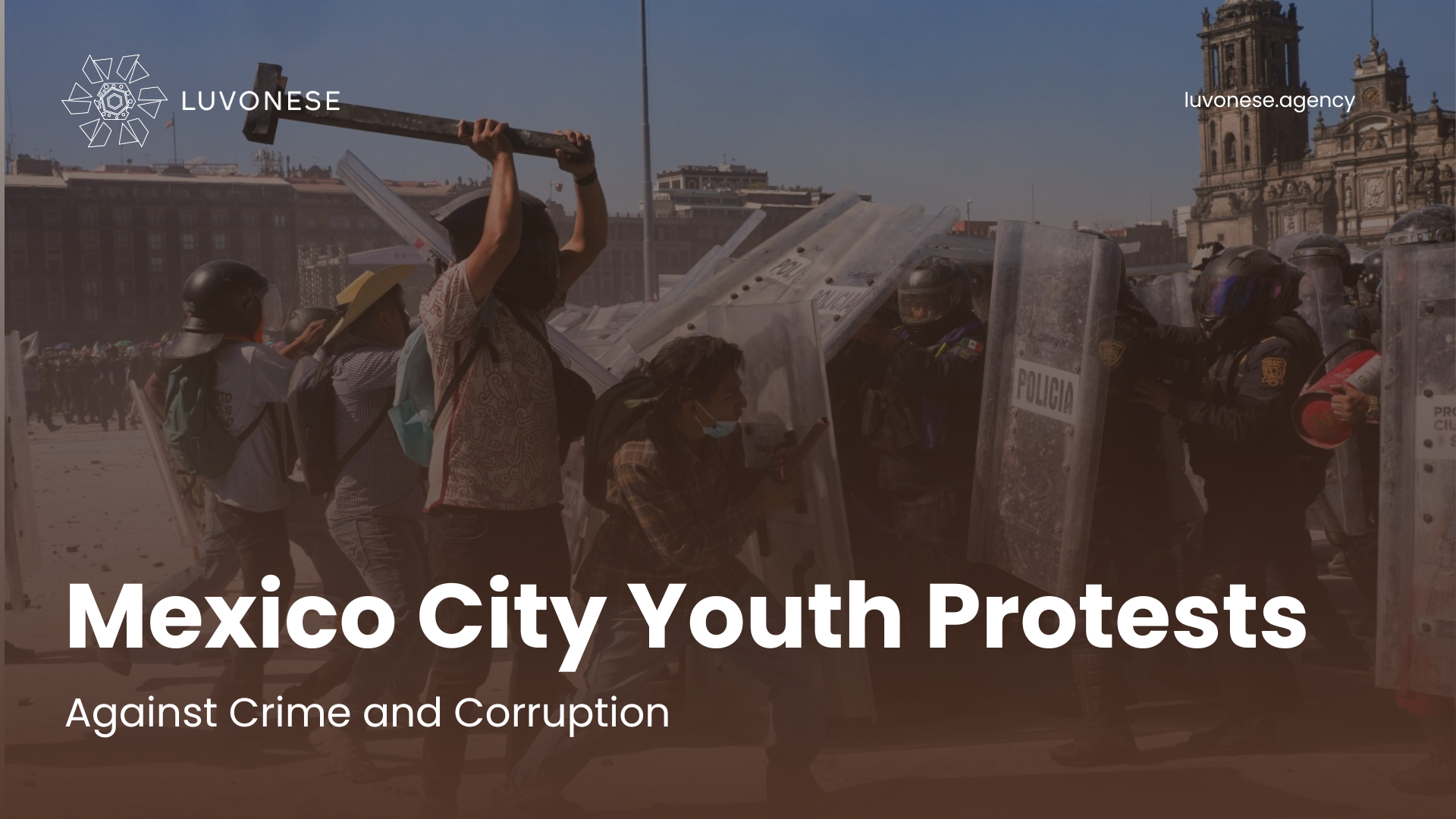
In the heart of Mexico City, a new wave of protest is emerging—led by youth who are tired of violence, corruption and systemic impunity. On 15 November 2025, thousands gathered in the historic Zócalo to demand change. The crowd included Generation Z and older allies, rallying under a shared frustration: “Enough is enough.” ABC News
But what began as a march for justice turned tense when a faction of protesters clashed with riot police, dismantling barriers near the National Palace. Officials reported around 120 people injured, many of them officers. Reuters
A Generation Speaks Up
What sets these protests apart is the youth voice. Many participants identify as Generation Z—born from 1997 onward—and describe the movement as non-partisan, rooted simply in the desire for safety, fairness and accountability. Reuters
For them, the issues are personal: the assassination of a mayor, gang violence in their neighborhoods, and a government perceived as slow to act. The imagery of pirate-skull flags and chants for justice signalled a shift in tone and identity. ABC News
Root Causes — Crime, Corruption, Impunity
Protesters pointed to persistent issues:
-
Rising violence and cartel influence
-
Politicians accused of inaction or collusion
-
Impunity for crimes even when publicly visible
These demands culminated in the murder of a mayor whose anti-crime stance made waves. That event catalysed national anger and mobilised diverse groups. Wikipedia
The Day of the Protest
The march started peacefully—thousands flowing through Paseo de la Reforma toward the Zócalo. But as dusk fell, a more militant fringe emerged: hooded protesters dismantled barriers, hurled rocks, and triggered a police response with force and tear gas. Al Jazeera
Among the reported 120 injured, 100 were police officers and 40 required hospital treatment. Authorities also arrested around 20 individuals, with more referred for administrative offences. Reuters
Voices from the Crowd
One protester, 29-year-old Andres Massa, carried the pirate-skull flag and said:
“We need more security.” TRT World
These personal declarations reflect more than slogans—they reflect frustration rooted in real daily risks and lack of faith in institutions.
Government Response and Narrative
President Claudia Sheinbaum condemned the violence and suggested foreign-backed actors and bots may have co-opted the movement. The government labelled parts of the protest as “inorganic.” Reuters
Whether accurate or not, these statements reflect a tug-of-war over legitimacy: Is this a grassroots uprising or a manipulated campaign?
Why This Protest Matters
This moment is symbolic—and potentially systemic. It shows:
-
Youth are no longer spectators—they’re actors.
-
Crime and corruption are no longer abstract—they’re triggers.
-
Social movements now combine digital organisation with street mobilisation.
For brands, policymakers, and communicators, the takeaway is clear: listen to younger voices, understand deeper grievances, and recognise that public trust is fragile.
What Comes Next?
The protest’s immediate effect is visibility—on TV screens, social feeds and city squares. But the lasting effect will depend on:
-
Whether the government acts meaningfully on demands
-
How youth-coalitions sustain momentum
-
Whether the protest inspires similar movements across Latin America
If next moves are ignored, the risk is that frustration turns into disruption.
Final Thoughts
The Mexico City protest isn’t just about one day of marches—it’s about a generation saying: enough. For these young people, crime and corruption aren’t future problems—they are present realities.
Whether the government responds or resists, the voices in the Zócalo are echoing far beyond the city. And for brands, communicators, and civil society, this story is a reminder: when trust falls, the street speaks.