





El-Fasher Falls, the World Grows Anxious Again
Sudan has once again drawn the world’s attention after the city of El-Fasher, the capital of North Darfur, fell to the Rapid Support Forces (RSF).
For 18 months, the city endured a brutal siege, leaving civilians trapped in fear and struggling to survive with little food or medical care.
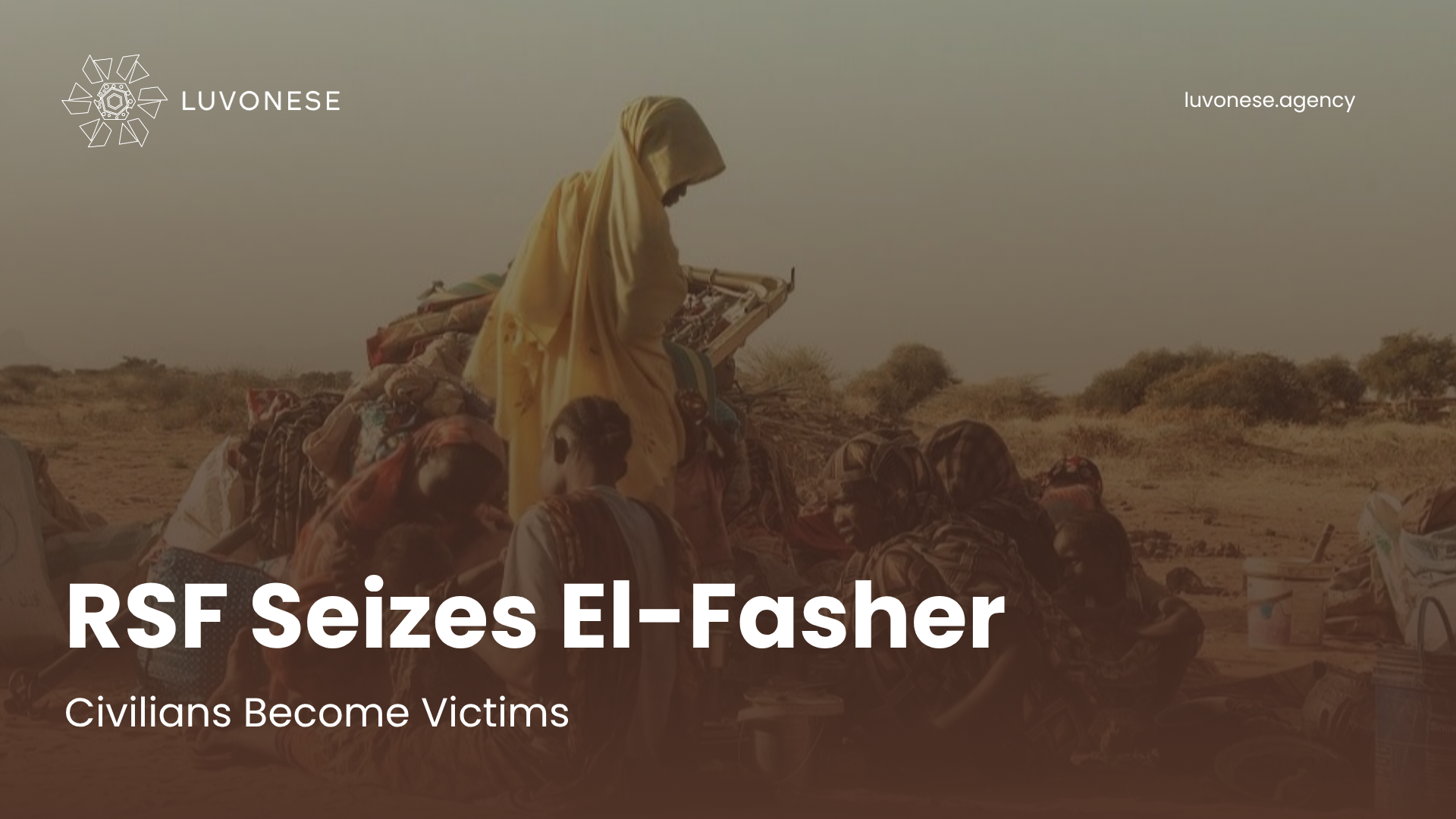
Now, with RSF in control, thousands of people remain trapped among the ruins — without food, water, or safe shelter.
According to a report from the Associated Press, only a few thousand have managed to reach the refugee camp in Tawila, about 65 kilometers away from El-Fasher.
Thousands more remain stranded within conflict zones, cut off from humanitarian aid.
Read the full report at Associated Press.
RSF Accused of Human Rights Violations
Humanitarian sources report that after seizing the city, RSF fighters intensified attacks on civilians. Testimonies from refugees tell of beatings, killings, and sexual assaults carried out by RSF members.
The World Health Organization (WHO) recorded at least 460 people killed inside El-Fasher’s hospital due to direct assaults and executions.
Medical facilities were completely destroyed, leaving patients and doctors defenseless amid the chaos.
Thousands Displaced, Only a Few Survive
Data from the International Organization for Migration (IOM) estimates that over 70,000 people have fled since RSF took over.
However, only around 6,000 refugees reached the Tawila camp safely.
The rest are believed to be hiding in the city or trapped along desert routes, vulnerable to random gunfire.
Many survivors arrived at the camp with gunshot wounds, bruises, and severe dehydration.
Children were among the most affected — the Norwegian Refugee Council (NRC) reported 170 unaccompanied minors, some as young as three years old, who reached the camp with strangers after losing their families.
Survivors Speak: “We Walked Through Gunfire”
Refugees describe their escape as hell on earth. They walked for days under the scorching sun, dodging armed checkpoints, and drinking dirty water to stay alive.
“Many people died along the way. We had to leave their bodies behind because there was no time to bury them,” said one survivor to aid volunteers.
Hospitals and Infrastructure Reduced to Ruins
The fall of El-Fasher not only cost lives but also destroyed the city’s entire infrastructure.
Hospitals, markets, and food routes have collapsed. Food prices have skyrocketed by up to 500%, and medicine is nearly impossible to find.
Humanitarian convoys cannot enter the area because RSF has blocked all land routes.
International agencies warn of a looming famine if access is not restored soon.
Sudanese Government Urges Global Action
During a press conference in Cairo, Imadeldin Mustafa Adawi, Sudan’s Ambassador to Egypt, accused the RSF of committing war crimes and ethnic cleansing.
He called on the world to classify the RSF as a terrorist organization and to take urgent international action to protect civilians.
According to Associated Press, Adawi also accused the United Arab Emirates (UAE) of providing logistical support to the RSF.
Although the UAE denied the allegations, documentary evidence points to weapons transfers from the Gulf region into Sudan.
The World Stays Silent as the Crisis Deepens
Aid organizations warn that El-Fasher has now become a lawless zone.
“We fear that tens of thousands of people remain trapped inside the city with no safe way out,” said Shashwat Saraf, Sudan Country Director for the NRC.
Meanwhile, the international community has limited itself to issuing statements of condemnation — with no concrete action.
Humanitarian groups continue to call for an immediate ceasefire, independent investigations, and safe corridors for civilians trying to flee.
Hope for Ceasefire and Civilian Transition
Several African nations, in coordination with UN mediators, are drafting a three-month ceasefire plan that could pave the way for a civilian transitional government within nine months.
However, many remain skeptical, as RSF continues to expand its military campaign toward central Sudan.
The World Must Act, Not Just Mourn
The tragedy of El-Fasher proves that Sudan’s conflict is not merely a political struggle — it’s a moral failure of the international community.
As long as powerful nations remain silent, the suffering of Sudanese civilians will continue.
Peace will never come through words alone, but through decisive action.
Every hour without intervention means more lives lost in Darfur.
Conclusion
The Sudan El-Fasher crisis is a call for humanity. Amid diplomatic silence, the suffering of civilians grows deeper.
The world can no longer afford to “condemn” without action.
Every response no matter how small is a step toward restoring justice and compassion in a broken world.