





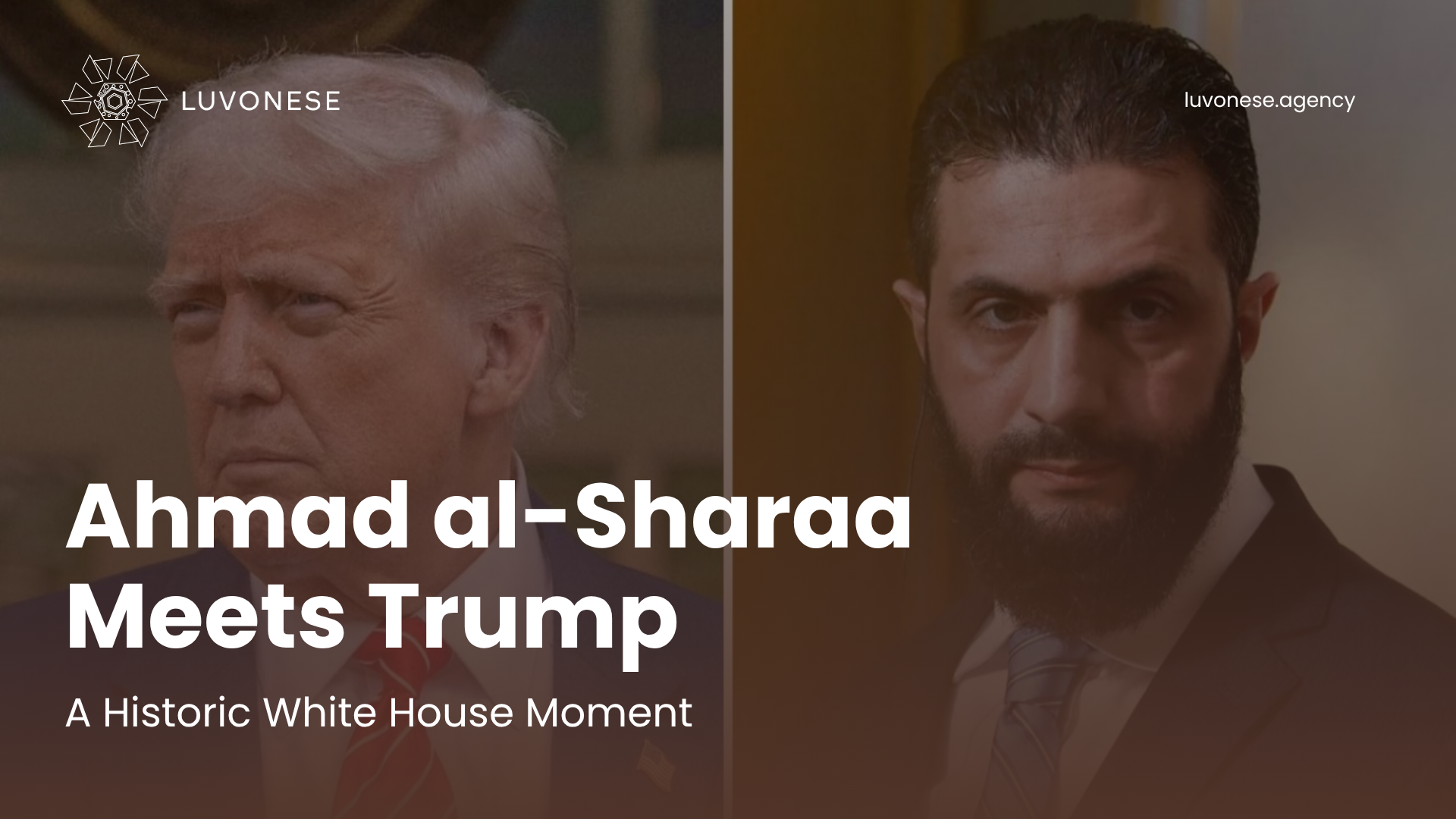
Ahmad al-Sharaa story is nothing short of extraordinary. Once held at Abu Ghraib by U.S. forces, he later led Hayat Tahrir al-Sham (HTS) — before dismantling it and taking power after the fall of Bashar al-Assad. His rise from extremist to interim president has reshaped how the world views Syria.
From Jihadist to President
Following Assad’s fall, al-Sharaa redefined his image — trading fatigues for suits and positioning himself as a reformer. He pledged to rebuild Syria and bridge its ethnic and religious divisions. The international community, once hostile, is now cautiously optimistic about his leadership.
The White House Invitation
For the first time in history, a Syrian leader was invited to the White House. President Donald Trump welcomed al-Sharaa, describing him as “a tough guy doing a good job.” The meeting marks a new phase of U.S.-Syria engagement and showcases al-Sharaa’s success in shedding his past reputation.
Commitment Against ISIS
During his Washington visit, al-Sharaa announced Syria’s intent to join the U.S.-led coalition against ISIS, a pivotal move toward re-integration with Western powers. Two senior U.S. officials confirmed the plan as part of broader cooperation efforts in regional counterterrorism.
Sanctions Relief and Global Reentry
The U.S. and Europe have begun lifting sanctions imposed during Assad’s rule. Syria’s removal from the state sponsors of terrorism list is under review, and the Caesar Act may be eased soon. Analysts describe this rapid progress as “spectacular” — a signal of global trust in al-Sharaa’s new direction.
Challenges at Home
Despite diplomatic wins, al-Sharaa faces immense internal divisions. Conflicts with Kurdish authorities, ISIS remnants, and sectarian unrest persist. Critics accuse him of consolidating power rather than empowering citizens — a challenge that could define his presidency.
Regional Dynamics and Global Stakes
The U.S. sees an opportunity to reshape alliances in the Middle East. Trump hopes Syria could one day join the Abraham Accords, normalizing ties with Israel. Meanwhile, Russia maintains influence, and Iran’s presence continues to complicate peace prospects.
A Turning Point in Modern Diplomacy
Al-Sharaa’s White House visit marks a symbolic realignment in global politics. For Syria, it represents hope; for Washington, a calculated risk. It’s a test of whether diplomacy can triumph over a legacy of division and war.
Conclusion
From a prison cell to the Oval Office, Ahmad al-Sharaa’s path symbolizes the unpredictable nature of modern geopolitics. His meeting with Donald Trump may redefine Syria’s place in the world — but whether it brings unity at home remains uncertain.
In a world where perception shapes policy, his transformation proves that image and communication can shift history itself.