






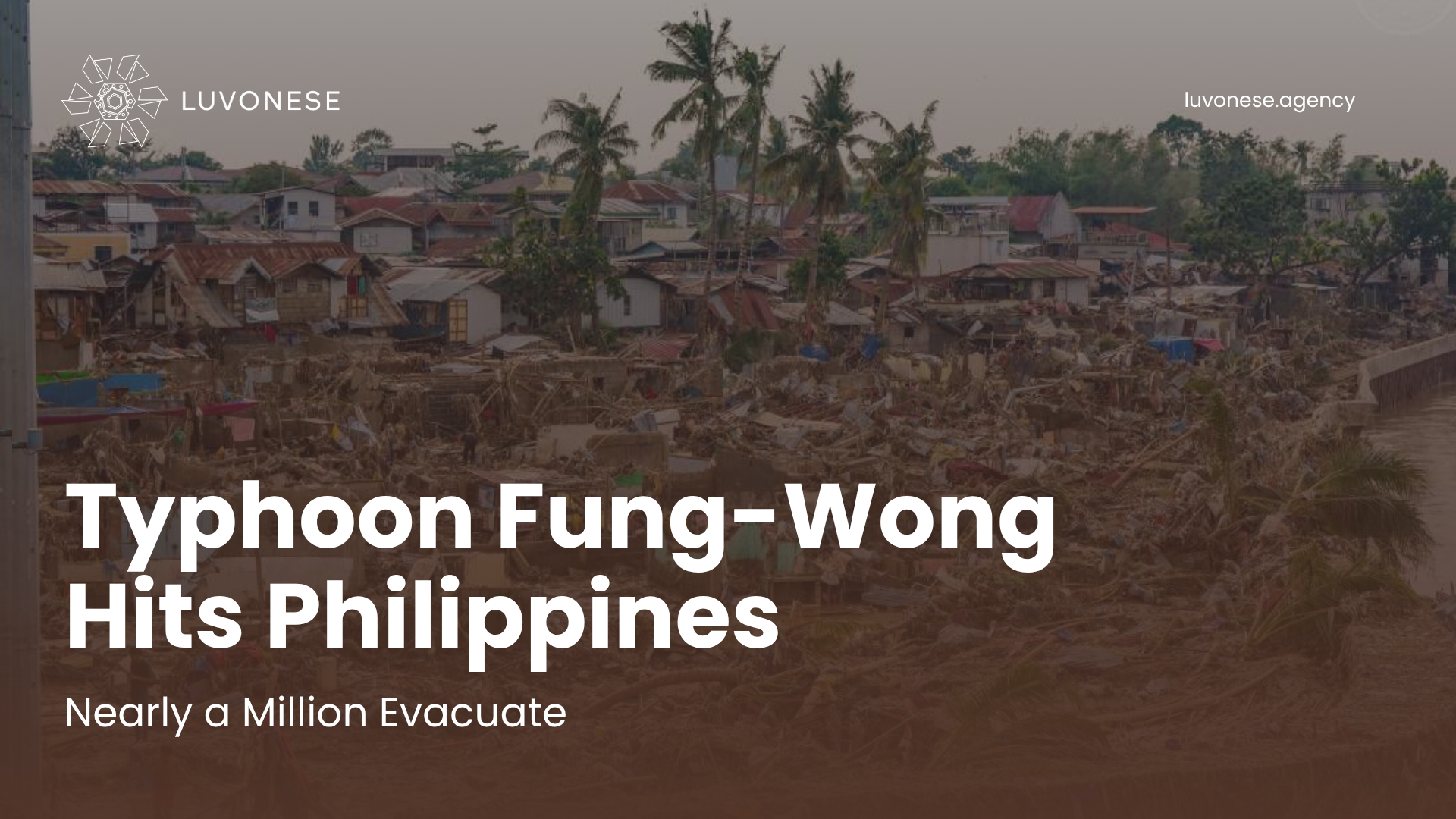
A Super Typhoon Strikes the Philippines
The Philippines has been hit by one of its strongest storms in years. Typhoon Fung-Wong, locally called Uwan, made landfall in Aurora province, Luzon, with winds reaching 185 km/h (115 mph) and gusts up to 230 km/h (143 mph). The storm unleashed violent winds and torrential rain before weakening slightly as it crossed the island overnight.
Nearly a Million People Evacuate
Government officials confirmed the evacuation of more than 900,000 residents from high-risk areas. Shelters in central and northern Luzon were filled with families escaping rising floodwaters — many still traumatized by Typhoon Kalmaegi, which left over 200 dead just days earlier.
Fatalities and Early Damage Reports
Authorities reported at least two deaths — one from drowning and another from debris collapse in Catbalogan City. Hundreds of flights were grounded as airports shut down, and emergency crews battled landslides and power outages throughout the region.
Destructive Winds and Flash Floods
The Philippine Atmospheric, Geophysical and Astronomical Services Administration (PAGASA) warned of “life-threatening” storm surges and widespread flooding. Over 200mm of rainfall was recorded in some areas, triggering landslides in Albay and Quezon provinces and submerging several communities.
Voices from the Ground
Residents described scenes of chaos and fear. In Aurora, local worker Hagunoy, 21, said he stayed behind to protect hotel property as winds “shook buildings like paper.” Meanwhile, evacuees such as Jessa Zurbano said they fled to shelters “for the children’s safety,” recalling the devastation of previous typhoons.
Humanitarian Response Under Pressure
The government declared a state of calamity to unlock emergency funds and streamline relief efforts. Rescue operations faced hurdles as roads were blocked and communications cut off. Aid agencies are prioritizing medical support, food distribution, and evacuation center management amid worsening weather.
Regional Impact and Storm Trajectory
Meteorologists expect Fung-Wong to move northwest toward Taiwan while maintaining typhoon strength. In Vietnam, the storm’s remnants caused fatalities and severe infrastructure damage. Meanwhile, Metro Manila braces for flooding and power interruptions as the storm’s outer bands linger.
Climate Change and Future Risks
Experts say climate change is intensifying the power of tropical storms, even if their frequency remains stable. Warmer ocean temperatures provide more energy for typhoons, leading to heavier rain and stronger winds. The Philippines, located in the Pacific “typhoon belt,” remains among the world’s most climate-vulnerable nations.
Conclusion
As Typhoon Fung-Wong ravages Luzon, the Philippines once again faces the dual challenge of disaster recovery and climate adaptation. The need for resilient infrastructure and digital preparedness is greater than ever — ensuring people receive life-saving information when seconds matter.