






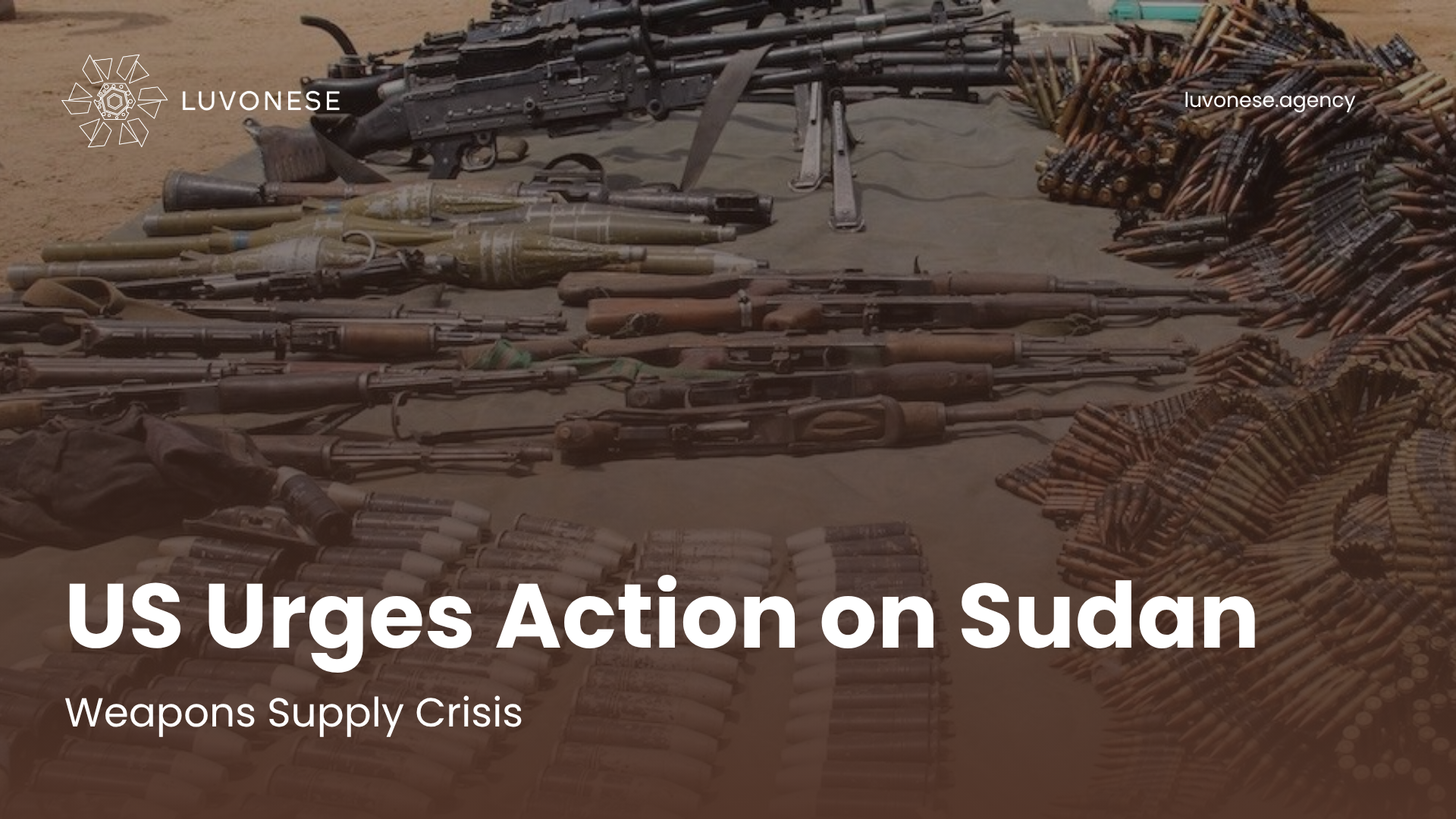
Sudan Weapons Supply at Global Spotlight
The United States has renewed calls for urgent international action to halt the Sudan weapons supply that continues to fuel atrocities committed by the Rapid Support Forces (RSF) across Darfur. Speaking at the close of a G7 foreign ministers meeting in Canada, US Secretary of State Marco Rubio condemned what he described as systematic and brutal violence perpetrated by the RSF in the recently captured city of El-Fasher.
Washington Presses for a Coordinated Response
Rubio stated that the RSF had engaged in widespread killings, sexual violence, and targeted attacks on civilians, stressing that the group relies heavily on external arms shipments. He urged partner nations to cut off all channels contributing to the ongoing Sudan weapons supply pipeline.
Accusations of Foreign Support and Denials
Sudan’s army has long accused the United Arab Emirates of providing weapons and logistical support to the RSF through regional smuggling networks. Both the UAE and the RSF deny the allegations, though multiple UN investigations have deemed some evidence credible.
Meanwhile, Rubio avoided naming specific countries at the press conference but hinted that members of the so-called “Quad”—the US, UAE, Egypt, and Saudi Arabia—are fully aware of which states are facilitating the Sudan weapons supply.
RSF’s Capture of El-Fasher and Ongoing Atrocities
El-Fasher fell to the RSF after an 18-month siege, completing their control over major cities in western Darfur. Satellite imagery shows mass graves, burned neighborhoods, and widespread destruction. Non-Arab communities continue to report ethnic-based killings similar to the early-2000s Darfur genocide.
Humanitarian groups say thousands may be dead or trapped without food, unable to escape the violence. Rubio warned that many civilians thought to have fled the city may instead be missing or deceased.
Ceasefire Proposals Undermined by Continued Fighting
Rubio acknowledged that previous US-backed ceasefire agreements had failed, with the RSF violating commitments shortly after signing. The RSF insists it acted in good faith and accuses the Sudanese army of refusing to engage in negotiations.
Sudan’s military leadership, however, says it objects to the UAE’s presence in the Quad and suspects foreign agendas behind the proposed truce.
Arms Trafficking and the Sudan Weapons Supply Chain
Amnesty International and UN experts have documented weapons entering Sudan from multiple countries, including Serbia, Russia, China, Turkey, and Yemen. The UAE is frequently cited as a transit hub before weapons travel through Chad and into Darfur.
Rubio added that some nations may not only fund the RSF but also allow their territory to serve as conduits for the Sudan’s weapons supply network. He also suggested Iran may be providing weapons or financial support to the Sudanese army—an accusation Tehran denies.
A Deepening Humanitarian Catastrophe
The ongoing war between the RSF and Sudan’s military has created the world’s largest humanitarian crisis, with over 150,000 deaths and 12 million displaced. Fighting has intensified since the fall of El-Fasher, with neither side showing signs of restraint.
International organizations warn that without cutting off the Sudan’s weapons supply, the conflict will escalate further, risking a complete collapse of the region.
Political Pressure Mounts on Western Governments
The UK government is facing scrutiny after reports that British-made weapons may have reached RSF fighters. Lawmakers called for a halt to arms exports to the UAE until it proves that its territory is not being used to support Sudan’s armed factions.
Despite a UN arms embargo on Darfur since 2004, restrictions have not been expanded to the rest of Sudan, something human rights groups say must change immediately to curb the Sudanese weapons supply.
Conclusion: A Crisis Demanding Global Action
As the conflict deepens, the United States is urging the world to cut off the Sudan’s weapons supply that enables the RSF and other armed actors to wage war on civilians. Whether international partners will enforce stricter measures remains uncertain, but the stakes—human, regional, and geopolitical—are growing by the day.